
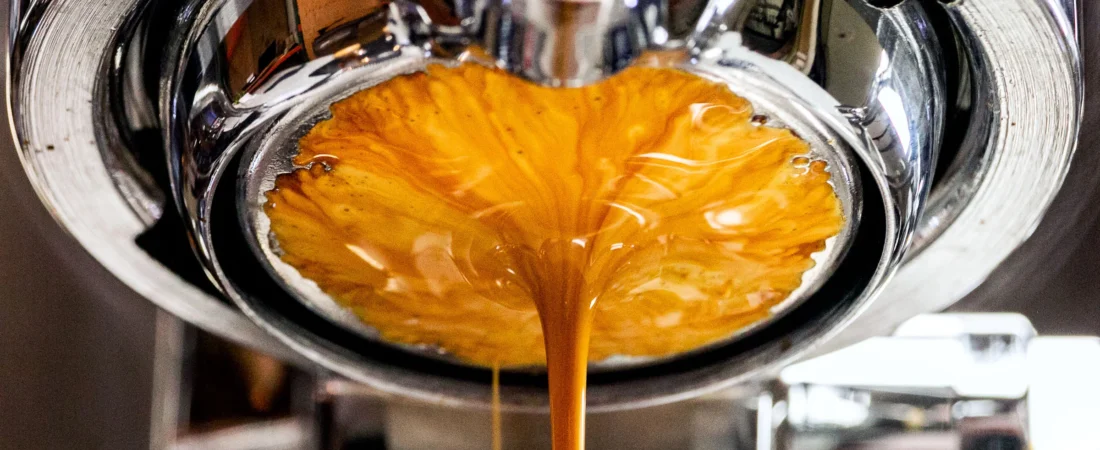
Why Does My Espresso Channel? (And How to Stop Channeling for Good)
If your espresso tastes harsh, uneven, bitter, or sour all at once, there’s a good chance your shot is channeling.
Channeling is one of the most destructive espresso problems because it:
- Ruins flavor balance
- Causes wildly inconsistent shots
- Makes dialing in feel impossible
The good news?
👉 Espresso channeling is completely fixable once you understand what causes it and how to eliminate weak points in your puck.
This guide explains what espresso channeling is, why it happens, how to spot it, and the exact steps to stop it permanently.
Amazon Associates Program: Some links on this site are generated through the Amazon Associates Program. We only recommend products and services we genuinely trust and believe provide real value. Please see our Terms & Conditions.
What Is Espresso Channeling?


Channeling happens when water finds paths of least resistance through the coffee puck instead of flowing evenly.
Instead of extracting the entire puck uniformly:
- Some areas are over-extracted (bitter)
- Others are under-extracted (sour)
The result is espresso that tastes:
- Sharp and harsh
- Hollow or thin
- Inconsistent shot to shot
Channeling isn’t subtle — it destroys balance.
How to Tell If Your Espresso Is Channeling
Common signs of channeling include:
- Spurting or spraying from the portafilter
- Uneven flow patterns
- Pale crema with dark streaks
- Wild flavor swings between shots
- Bitter and sour flavors at the same time
A bottomless portafilter makes channeling obvious — but even without one, taste usually gives it away.
The Root Cause of Channeling: Uneven Puck Density
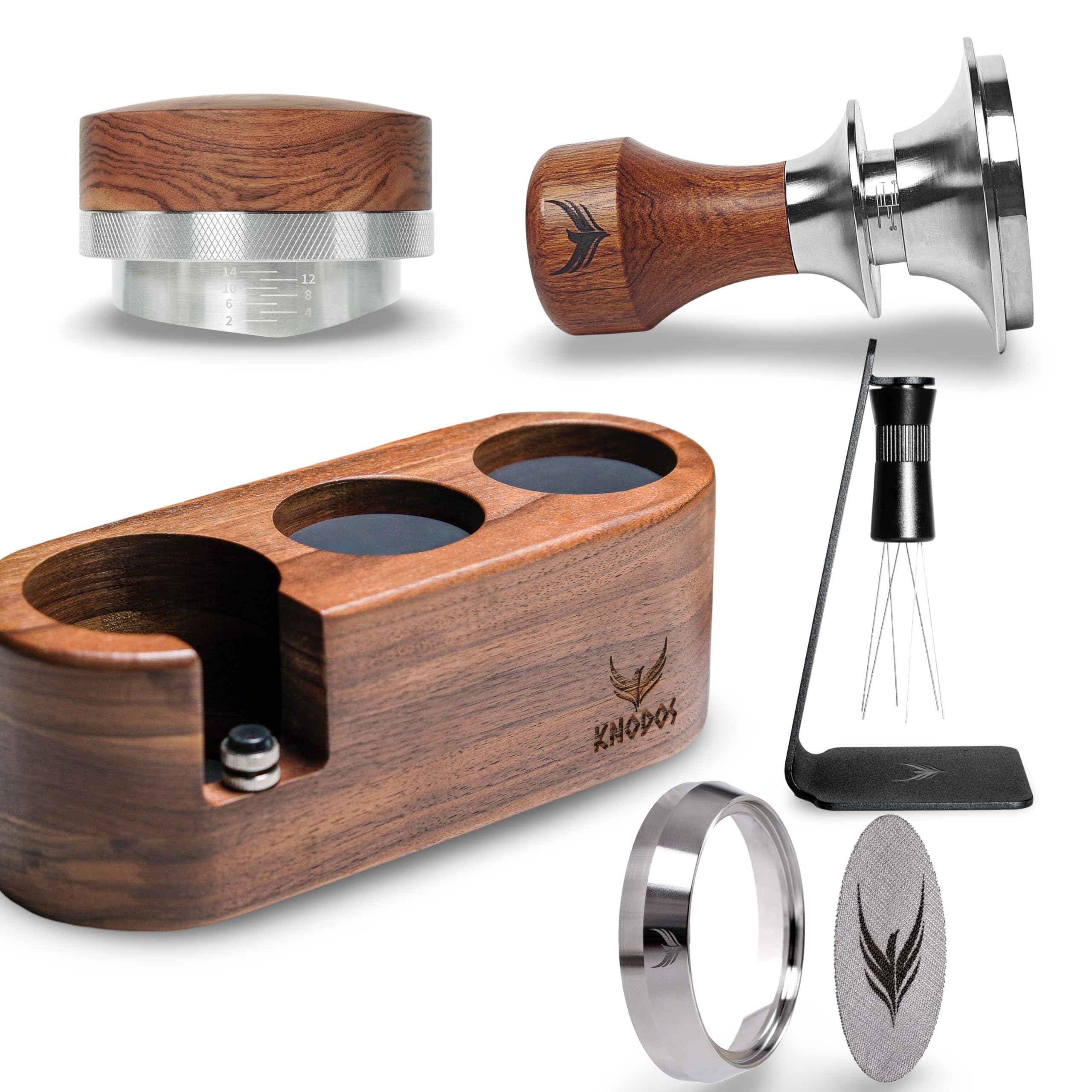

Channeling occurs when the puck has weak spots.
These weak spots come from:
- Uneven distribution
- Clumps in ground coffee
- Crooked or inconsistent tamping
- Poor grind consistency
- Incorrect dose for basket size
Water will always exploit the weakest area first.
Grind Quality: Inconsistent Grinds Create Channels

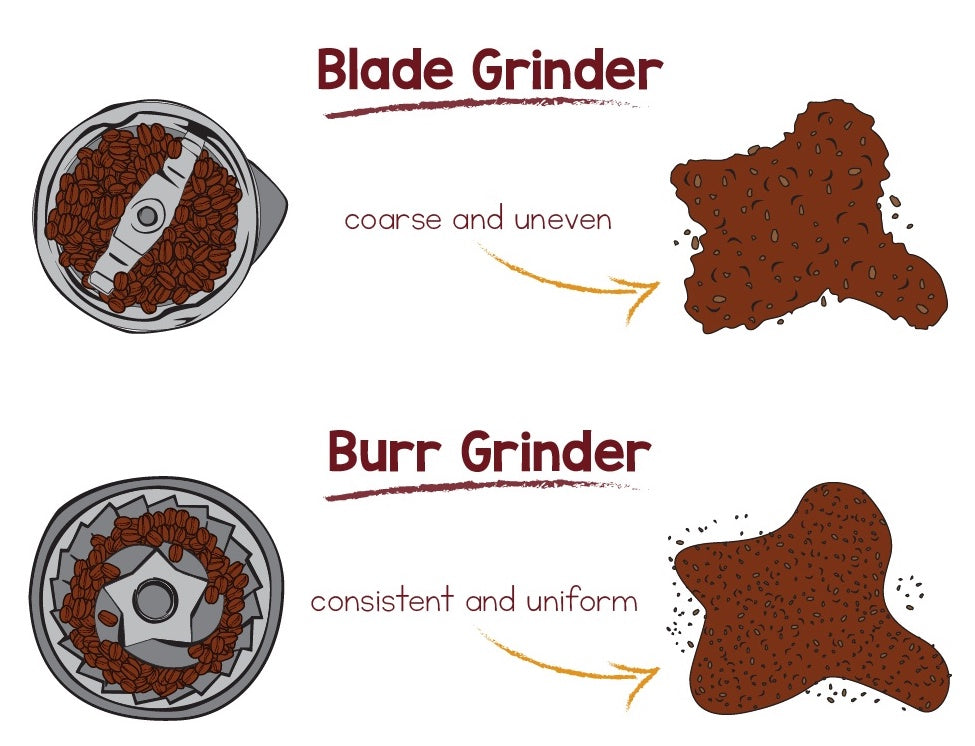
Inconsistent grind size is a major contributor to channeling.
Problems caused by poor grinders:
- Too many fines clog parts of the puck
- Large boulders create gaps
- Uneven resistance across the basket
This forces water to carve channels instead of extracting evenly.
Distribution: The Most Overlooked Step

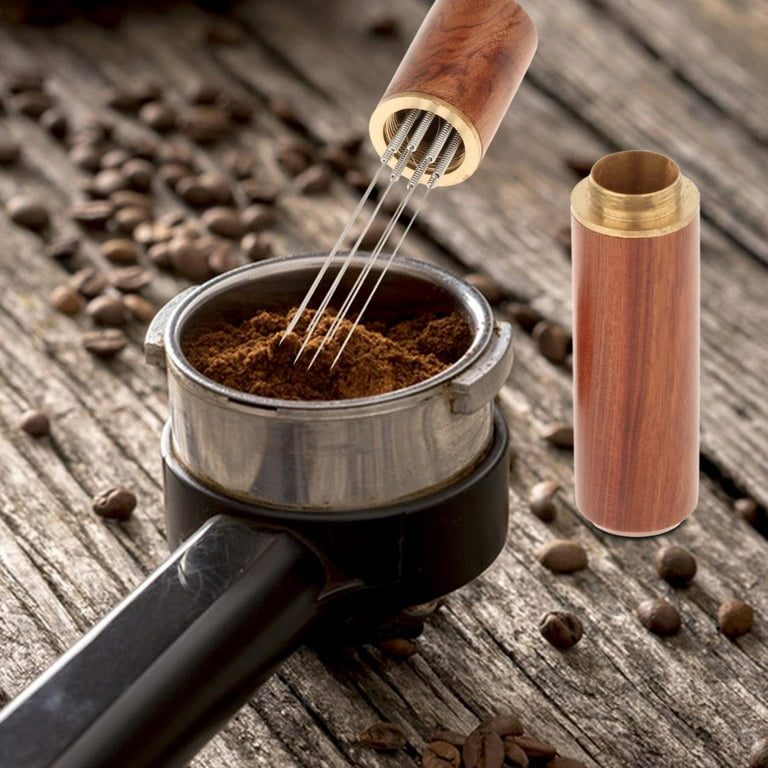
Many people tamp perfectly — but distribute poorly.
If grounds are mounded, hollowed, or clumped:
- Tamping locks in the problem
- Channeling becomes unavoidable
Proper distribution ensures even density before tamping.
Tamping: Level Matters More Than Force


Tamping mistakes that cause channeling:
- Tamping at an angle
- Inconsistent pressure
- Re-tamping after knocking the portafilter
Key rule:
Level > pressure
A crooked tamp guarantees uneven flow.
Dose & Basket Mismatch

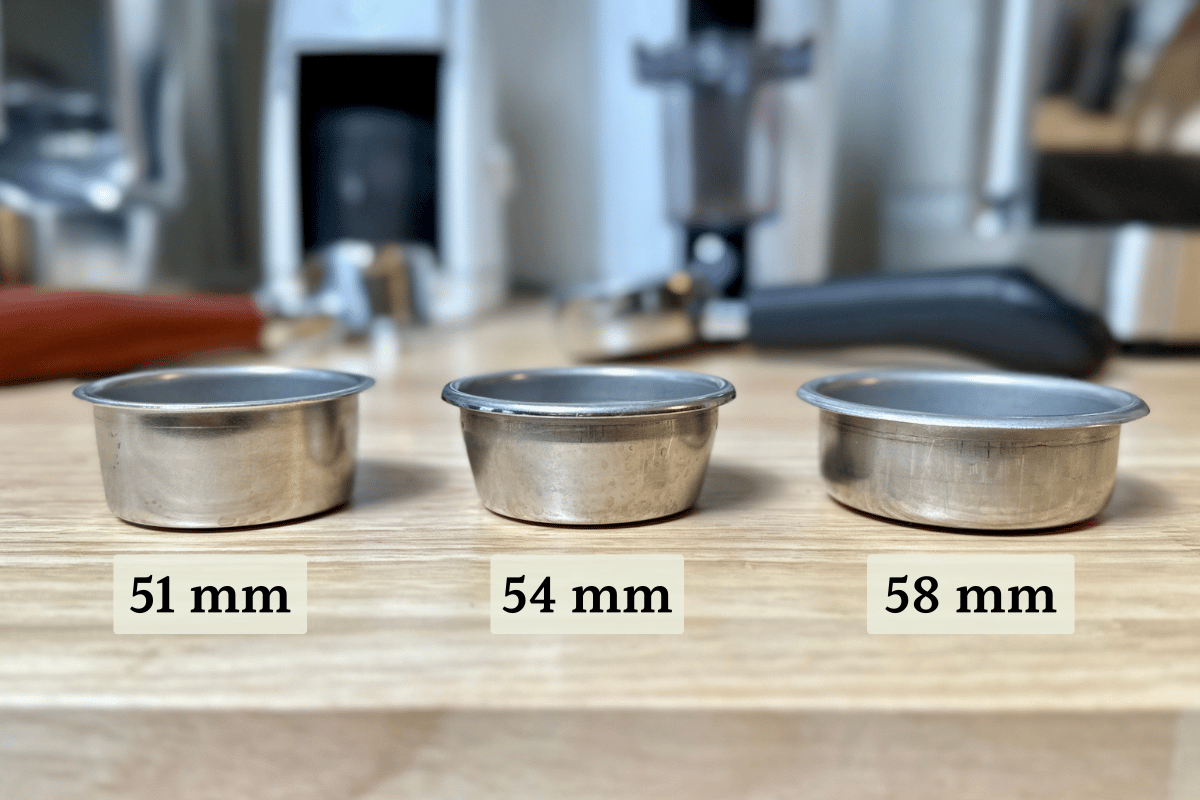
Using the wrong dose for your basket creates headspace issues.
Problems include:
- Underfilling → weak puck
- Overfilling → cracked puck
- Puck touching shower screen
Each increases channeling risk.
Grind Size & Channeling (Yes, Both Matter)
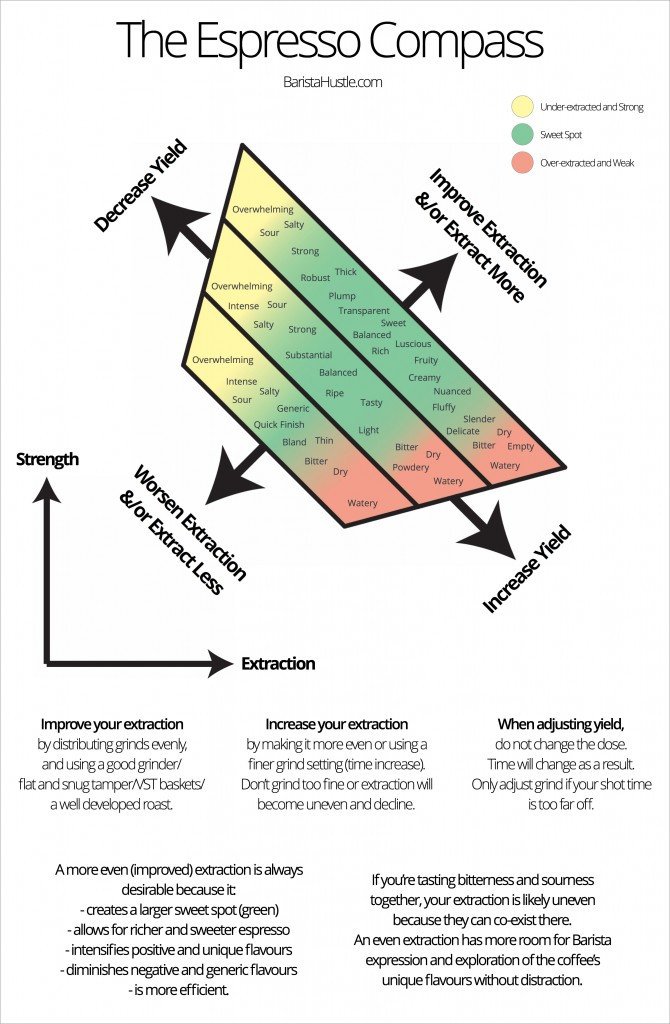
Channeling can happen at any grind size, but:
- Too coarse → water rushes through gaps
- Too fine → pressure builds until it breaks through weak spots
Dial grind size after fixing distribution and tamping.
Pressurized Portafilters Hide Channeling
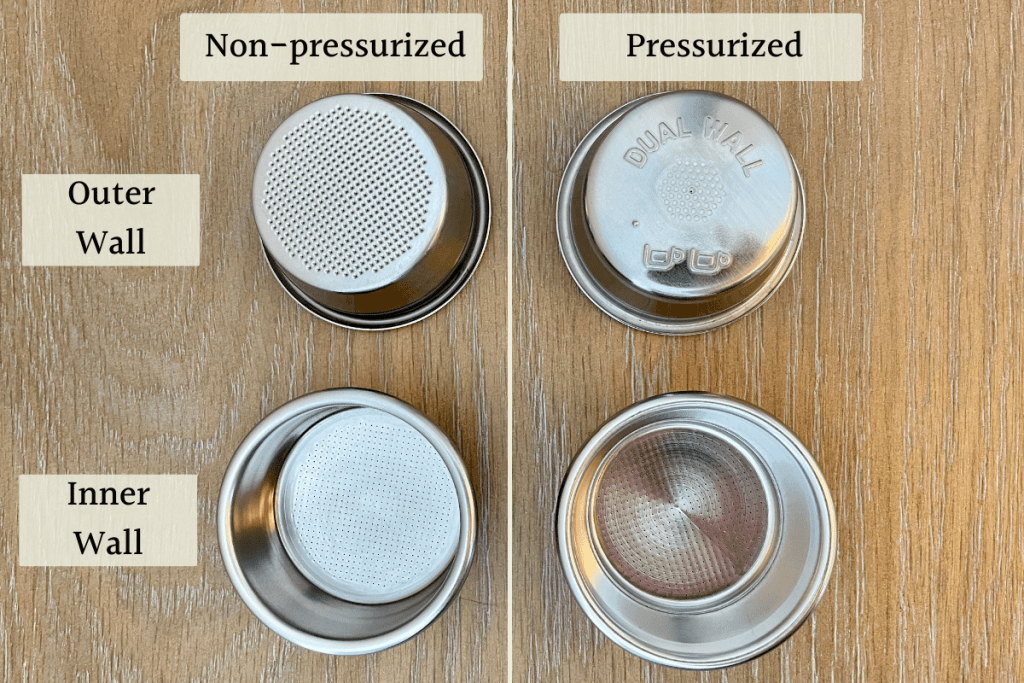
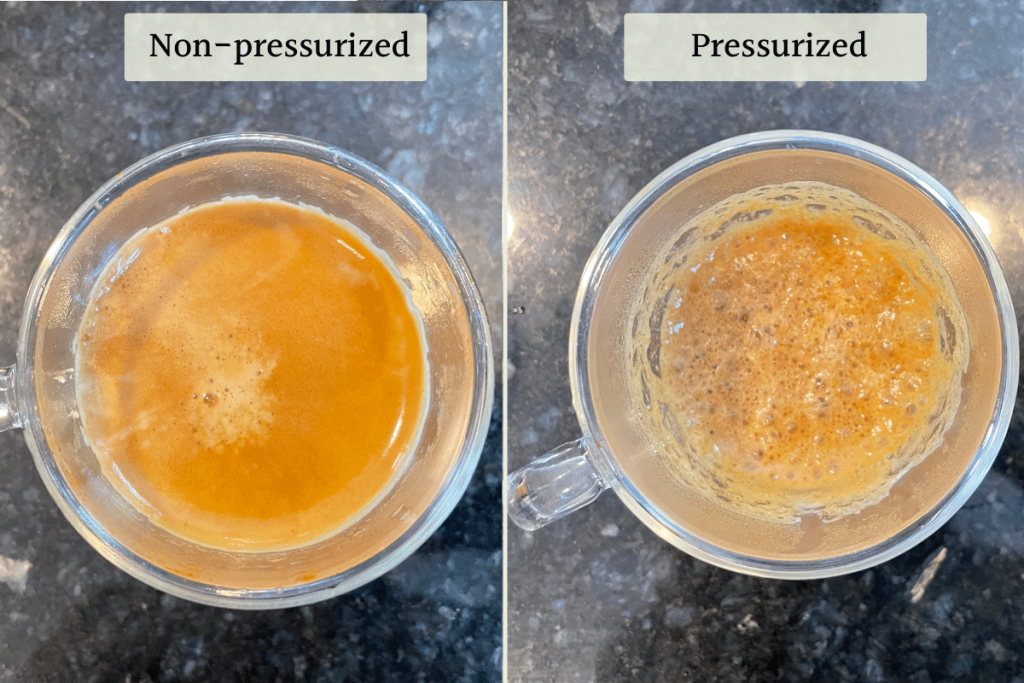
Pressurized portafilters:
- Mask extraction problems
- Produce fake crema
- Prevent skill improvement
They don’t fix channeling — they hide it.
Switching to non-pressurized baskets reveals real extraction and real fixes.
Bean Freshness & Channeling

Stale beans:
- Produce less resistance
- Break down unevenly
- Increase channeling risk
Fresh beans compress more evenly and extract more predictably.
Step-by-Step: How to Stop Channeling Permanently

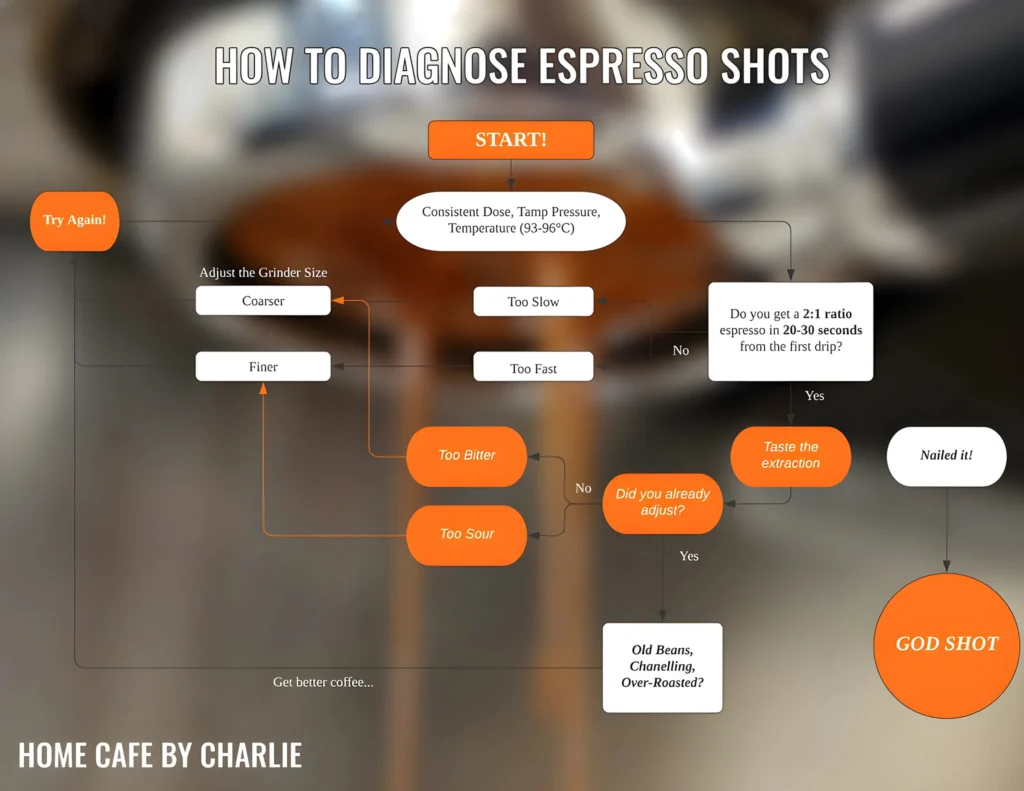
Follow this exact order:
- Use fresh, quality beans
- Grind with a consistent burr grinder
- Break clumps and distribute evenly
- Tamp level — not excessively hard
- Match dose to basket size
- Dial grind last
Fix the foundation before chasing grind tweaks.
When Channeling Isn’t Your Fault
Persistent channeling can be caused by:
- Cheap grinders with poor burr alignment
- Inconsistent baskets
- Machines with unstable pressure
- Pressurized systems
At that point, equipment becomes the limiting factor, not technique.
Leave a Reply